
The right music turns trust into loyalty.
We've spent years helping brands turn music into a measurable advantage. Let's talk about what it could do for yours.

We surveyed 500 U.S. parents of children under 13 to understand how music shapes trust, safety, and behavior inside apps. The results point to a clear pattern: expectations are high, current experiences are inconsistent, and the opportunity to improve is significant.
Read the full report below ⬇️
For product teams whose apps are used by or around kids, it pays to understand how music impacts trust, retention, revenue, and growth.

Every screen a kid touches now plays music. The soundtrack starts early and follows them everywhere: a bedtime story app through a smart speaker, a fitness class in the living room, a gaming app on the backseat iPad, a social video autoplaying between homework breaks. Music is in nearly every digital experience families use, even when the app itself was never built to be “about music.”
A parent hands over the tablet for a quiet breakfast game and suddenly hears lyrics about drinking from across the kitchen. A family workout app starts sounding more like late-night TikTok than a living room. Mom reaches for the skip button from the front seat while her six-year-old sings along to a chorus that definitely wasn’t written for kids. A “clean” playlist slips in references to hookups, getting high, or tequila shots because the song technically passed the platform’s explicit filter.
Parents notice these slip-ups long before product teams do.
Parents have been talking about screen time and digital safety for years. The Anxious Generation pushed the topic into the mainstream, and platforms have been catching up. Music inside apps is the latest thing to fit into that conversation. Spotify recently rolled out parent-managed accounts after years of pressure from families asking for them. Meta and YouTube continue facing scrutiny over youth safety and content moderation.
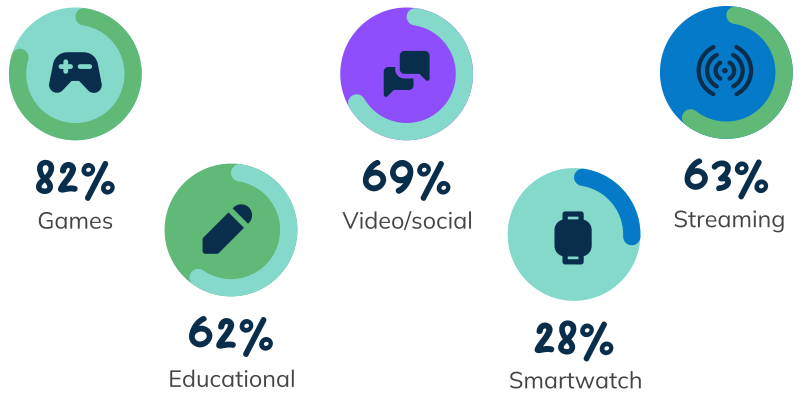
Kids encounter music almost everywhere they are online: 82% play games, 69% use video and social platforms, 63% use streaming apps, 62% use educational apps, and 28% use smartwatches with audio features.
 Music is part of the product experience, whether teams planned for it or not. Lauren Pufpaf, Feed.fm's Co-founder and COO, sees the moving target every parent is navigating: "The content you're comfortable with your kids consuming changes frequently as they grow. Having the ability to tighten or loosen controls around language and themes matters. It's not a static choice. Parents need to stay engaged and make decisions on a frequent basis."

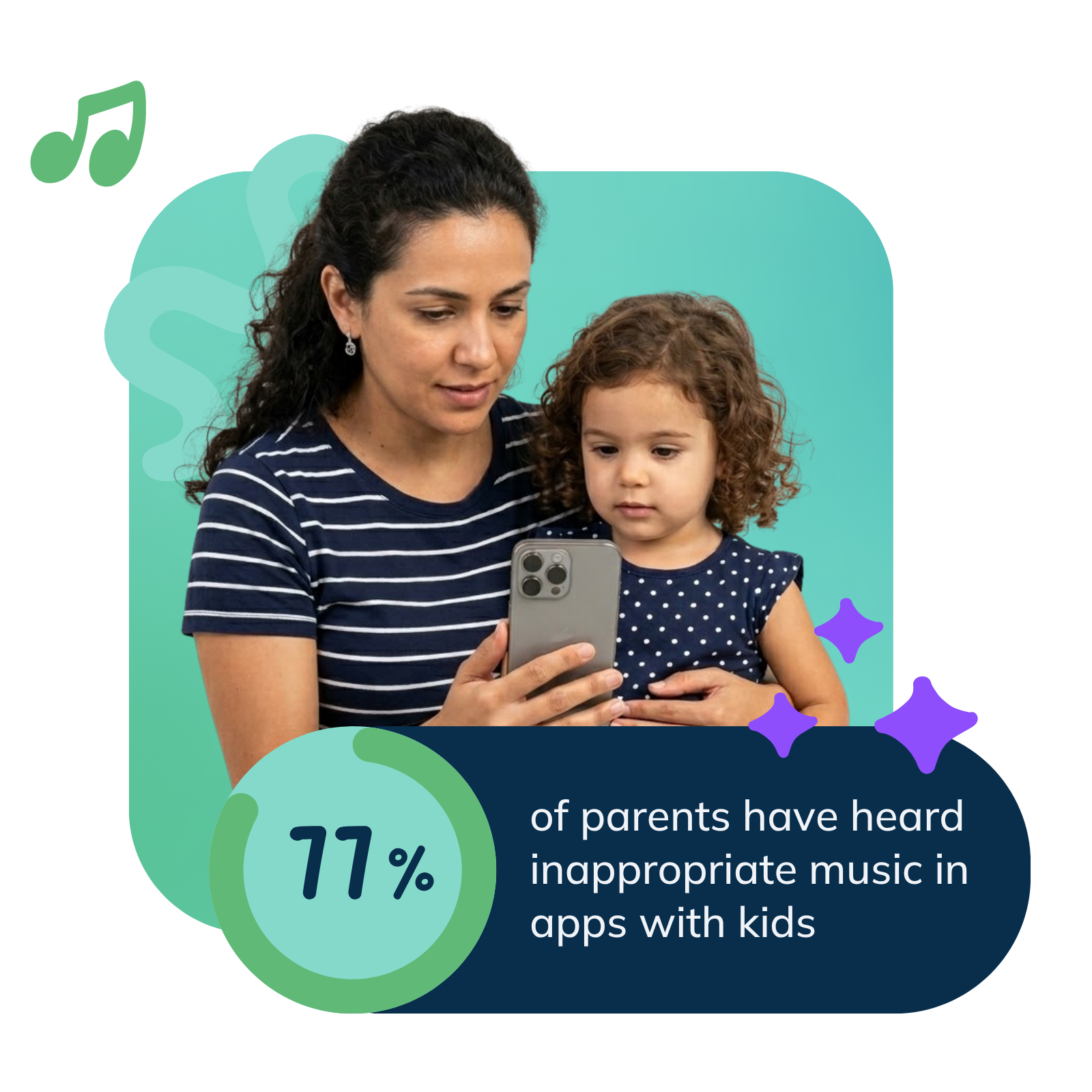
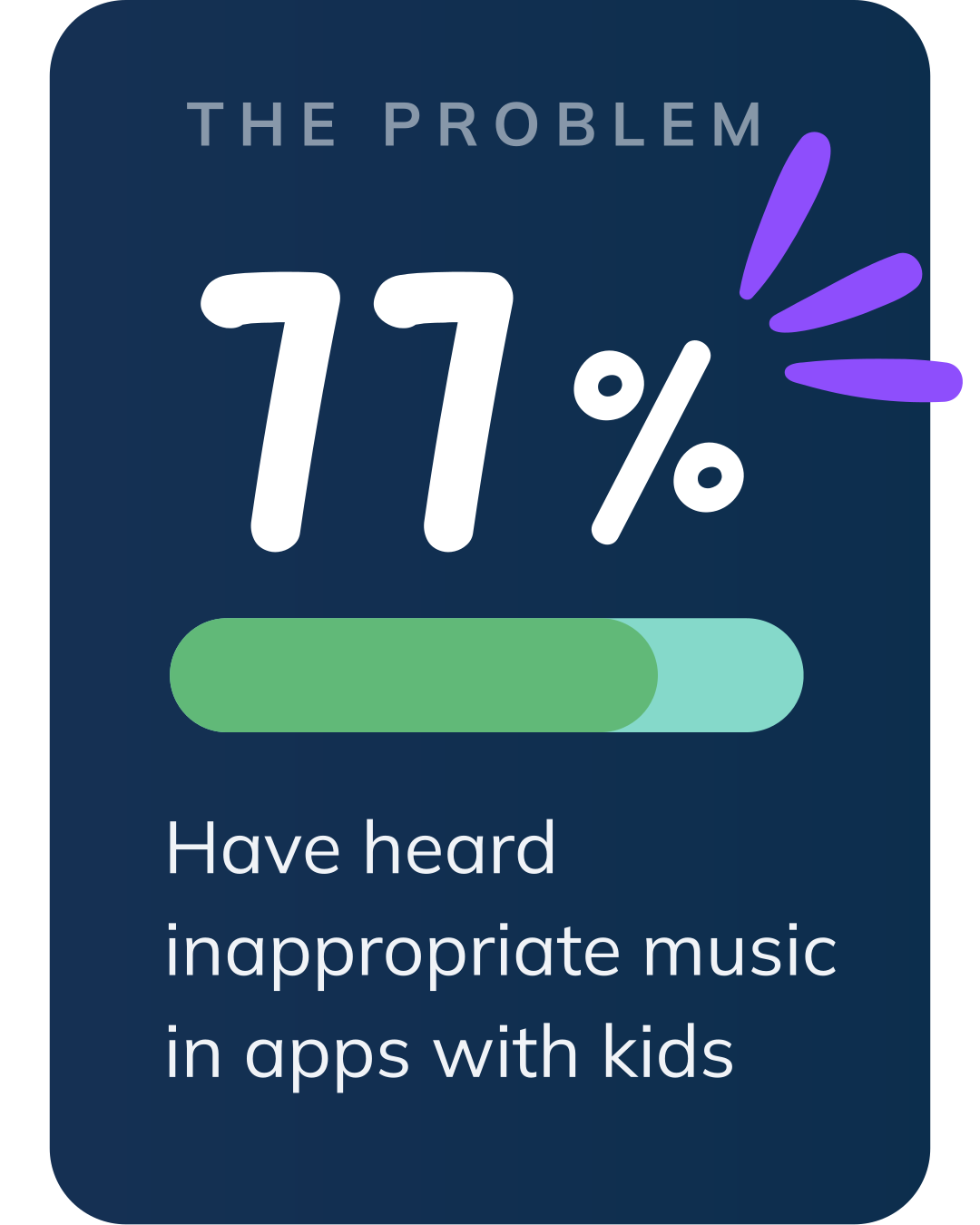
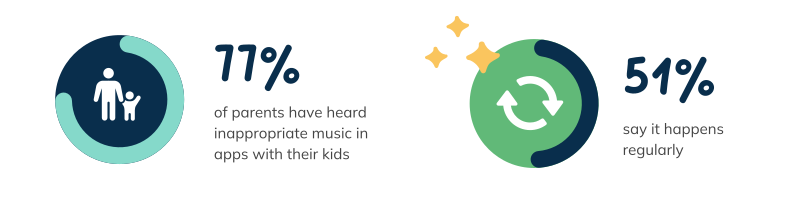
We asked the simplest version of the question we could write: Have you ever heard explicit or inappropriate music in an app while listening with your child? Three-quarters said yes. About half said it happens regularly. One in five said it happens frequently.
The parents who heard it took action. 84% stopped, skipped, or muted the track. They're catching what the app didn't, and scrambling to call an audible. Take Eric "Stens" Stensvaag, Feed.fm's Director of Curation. His son saw a TikTok dance to Katseye's "Internet Girl" on a friend's phone. "We had to explain that the lyrics weren't really about eating zucchini, and the dance wasn't either. That's a gap your brand wants to close." Brand safety inside music for apps reads differently once you see how many parents are correcting for it themselves.
This isn't about parents who aren't paying attention. Only 27% of households leave music decisions to the kid alone, and even there, the surprise track is the problem, not the kid.
Film, TV, and video games all developed tiered rating systems decades ago: Motion Picture Association (MPA), TV Parental Guidelines, Entertainment Software Rating Board (ESRB). Music never did. The closest thing is the Parental Advisory Label introduced in 1985, a binary lyric-only flag based on data record labels supply voluntarily. It's inconsistent, and it only covers lyrics.
If you think radio has it dialed in, think again. While the FCC regulates categories (obscene, indecent, profane), there’s no list of specific words that aren’t allowed on air. And everything is judged case-by-case based on context (and sometimes based on when and where it’s airing). Don’t count on family-friendly music if a long road trip finds you tuning in after dark.
Stop the surprise tracks
Parents shouldn't be the first line of defense for inappropriate music inside your app. Get a free audit of how your current music experience handles the gap between "clean" labels and what parents actually hear.


The "clean" label is 40 years old. It started life on a parental advisory sticker pasted on a record cover in 1985, made the jump to iTunes metadata, and got handed down through every streaming platform that came after.
 Stens points to where this breaks at the industry level: "the clean and explicit advisory data record labels supply is voluntary and not closely regulated. Brands can't rely on it to deliver popular clean music or family-friendly content." The metadata coming in the door isn't doing the work brands think it's doing.
At its best, the explicit label is a lyric filter. And the data says lyrics aren't the top of the list anymore. 76% of parents have been blindsided by themes in songs marked clean.
Parents flag sexual references more often than explicit lyrics. Violent content and drug references are close behind. The clean filter every major platform uses runs on lyric metadata, and the lyric layer keeps missing what makes parents cringe.
 Juan Hernandez-Cruz, who works on Feed.fm's curation team, sees the gap daily: "Clean versions of songs are often assumed to be safe for kids, but they frequently still carry themes parents don't expect. Romance, breakups, jealousy, nightlife, subtle innuendo. Even when explicit language is removed, the core message doesn't change. That's where parents feel caught off guard."
Lauren experienced this with her own family. "My eight-year-old daughter loves music. Loves it," she wrote. The kid had been building playlists on Lauren's Spotify account with parental controls turned on, "proudly curating her own soundtrack to homework, dance breaks, and weekend mornings." Lauren encouraged it. Then the playlist drifted. "One day, I heard lyrics drifting out of her room about drinking and partying. No explicit words per se, just themes that were clearly not meant for an eight-year-old." A few popular Kesha tracks had made their way in. "Next thing you know, she's asking me what a 'bottle of Jack' is. That access got removed very quickly."
The clean filter had done its job at the language layer and missed the rest entirely. A parent walking into a kid's room to ask about Kesha lyrics is the experience standard test, and the lyric layer keeps failing it. The examples below illustrate the same pattern. These aren't critiques of the artists, but illustrations of how clean filters behave when these songs hit an app context.
A song can pass the industry's clean filter and still revolve around adult themes. SZA's "Kill Bill" doesn’t contain stronger profanity than filters past "hell" and "damn," butcleanly while detailsing a revenge fantasy endingthat ends in murder. The censored version of DNCE's "Cake by the Ocean" cuts the f-word, and "goddamn," yet the song is built around adult sexual content. The lyric scrubbing works, but the themes survive.
We've been making the case for theme-aware curation for a while, and the Feed.fm music rating system is the culmination of our work with values-based brands. (more detail here).

Parents are clear about what they want from music in kids’ apps. 89% say clean music is non-negotiable. 96% rate parental controls important, with 83% calling them very or extremely so. What they're asking for is straightforward, but music controls inside apps barely exist outside the major platforms. As Lauren puts it: "Family-friendly isn't a content category. It's an experience standard." That distinction shows up everywhere in the data.
80% of parents say apps are mostly or fully responsible for filtering. The expectation gets handed to you whether you ask for it or not. Just how protective are parents today? 51% say kids shouldn't listen to PG-rated music until age 11. That was the most conservative answer the survey offered, and a majority picked it.
 Chris Schreiber, Feed.fm's VP of Marketing referred to this in a recent post on the missing layer: "Any product used by households, classrooms, or broad audiences must ensure that music enhances engagement without introducing risk." The harder question is what "responsible" looks like in practice. The work is in how you license music, not in checking a brand-safety box.
Parents want flexible controls that allow apps to tailor music experiences by audience or context, and consistent filtering that removes both explicit lyrics and inappropriate themes. The opportunity is to build experiences that parents trust enough to keep, return to, and recommend.
They want adjustable controls. 45% want a mix of automated filtering plus the ability to customize, 34% want pure customization, and 20% want purely automated settings. It's the same shift we wrote about when family-friendly stopped being a category and became an experience standard.
Parents have learned not to trust default-safe systems. Too many platforms have failed to deliver on promises of effective parent controls. They are asking for customized settings and filtering options. Apps that deliver this level of personalization will come out on top.
Build the music experience parents expect
Parents have set the bar for what good looks like. Get a free consultation on how to design controls, filtering, and curation that match what they're asking for.

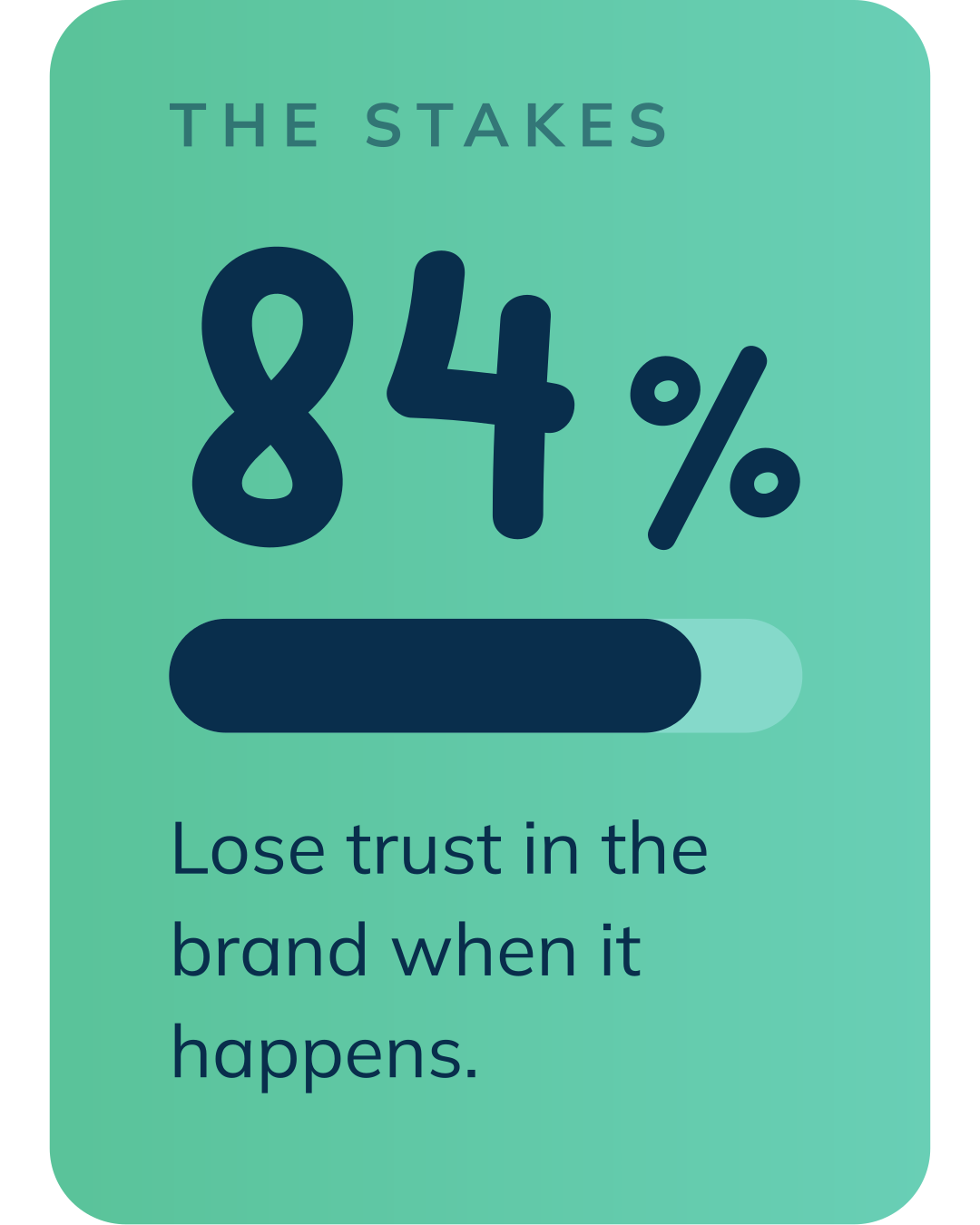
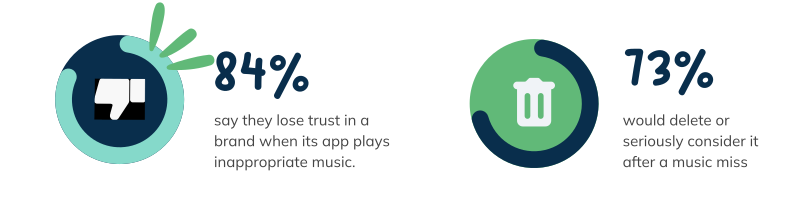
84% lose trust in a brand when its app plays inappropriate music. 73% would delete the app or seriously consider it.
No one loves fighting over app downloads on the kids' iPad, but that's what ends up happening. Your kid's Spotify account is set to non-explicit, but you keep hearing the word "bitch" playing over the speaker down the hall. This goes back to our earlier point. Explicit metadata is inconsistent across the industry; you really never know what you’re going to get.
Parents want to know: “Can I trust this app tomorrow morning when I hand my kid the iPad again?”
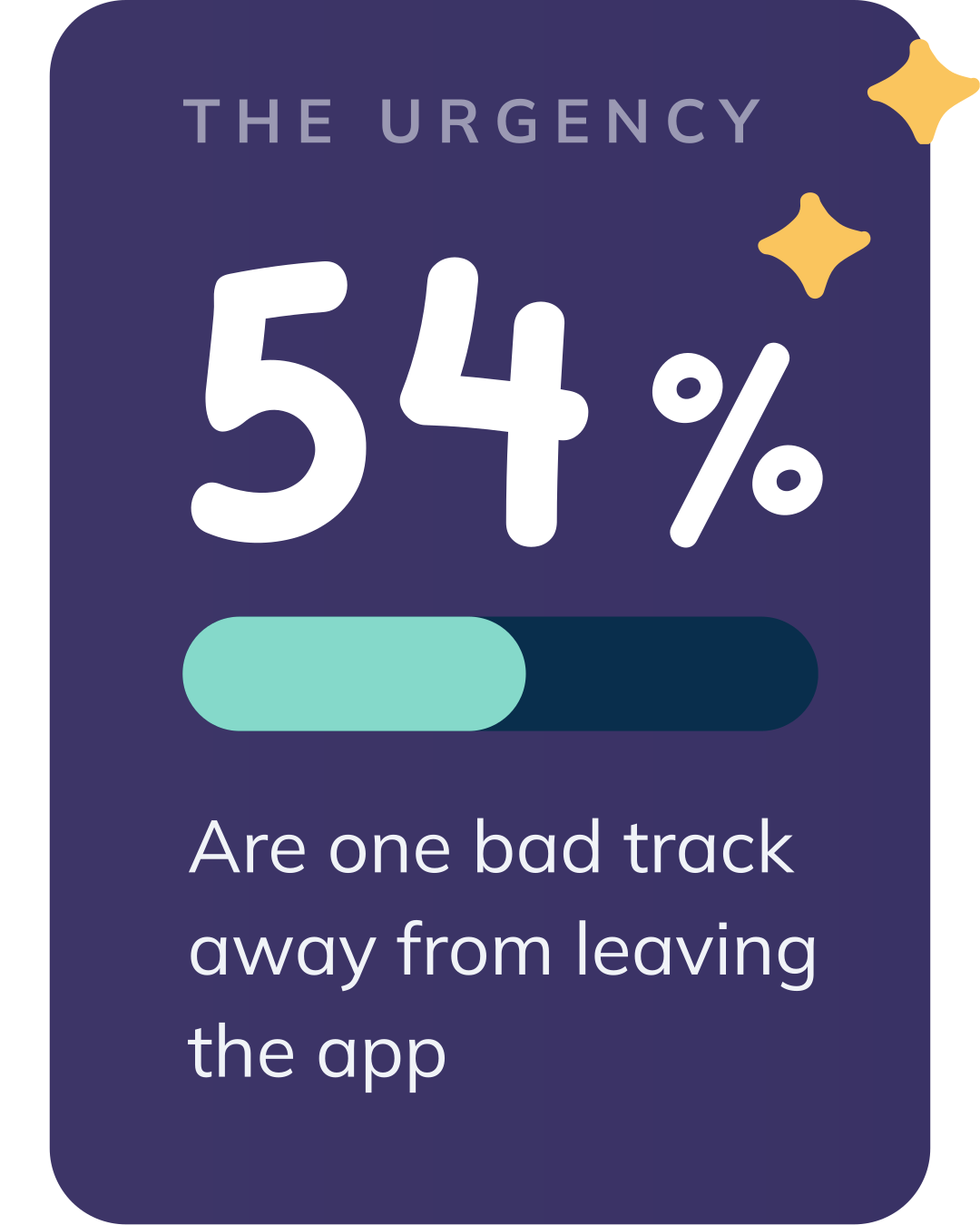
Parents respond quickly. 36% of parents say they would delete an app immediately after hearing inappropriate music. Others continue using the app with less confidence and a lower tolerance for future issues.
When you combine what parents have already heard with what they say they'd do about it, you land on a number worth paying attention to.

Most kids don't have a music subscription of their own. They have access to yours. iPads with someone else's Apple Music. YouTube on the family TV. A Yoto at bedtime. The Spotify Premium Family parent-managed kids account landed in the US in October 2025. Music shows up inside almost every product a kid touches. The app enabling it owns the experience.
The platforms are working on it. Spotify expanded parent-managed accounts. Apple Music has had explicit-toggle controls for years. Spotify Kids has been live since 2020. Sensical and Billboard launched a kids-focused music destination. Yoto signed Olivia Dean, 2026 Grammy Best New Artist awardee. Gabb Music opened up its music service beyond its own phones. New tools are landing from every direction at once, leaving parents to piece it all together.
Every platform handles "clean" differently, and the industry labels are still unreliable. The modern family music experience is duct-taped together across devices, apps, and streaming accounts.
Lauren names what's missing from both sides: "Better ways to adjust filters, and the ability to get more precise with what you allow, would go a long way."
If your product uses music from other platforms, or if you're planning to build your own music experience, the platform-level controls don't carry over. Whatever music experience you create inherits the responsibility, the trust, and the data we've just walked through:
Metadata is inconsistent, lyrics are nuanced, and context matters. That leaves product teams guessing about what will actually play inside their app. That guesswork is exactly what parents notice. The opportunity is the mirror image of the risk: get it right, and parents notice that too.
Set your own standard
Get a free consultation on building a music experience your audience can rely on, no matter what they're using elsewhere.

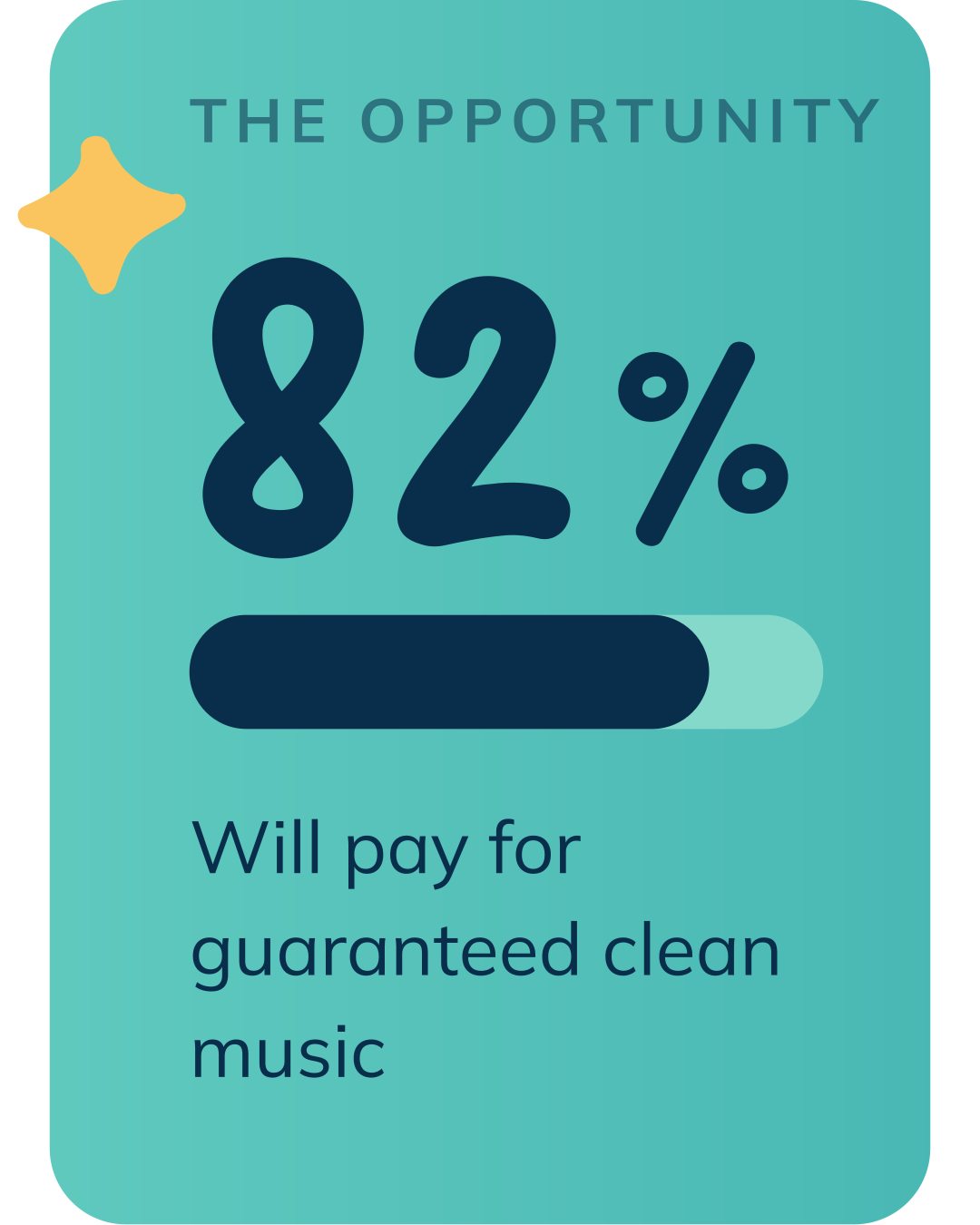
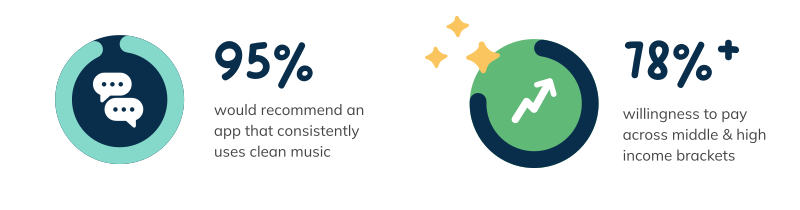
82% of parents will pay for an app or feature that guarantees clean music, and 70% would pay $1–9.99 a month. Parents are putting real money behind their expectations. When “clean” music isn’t always reliable, parents often have to step in and manage the experience themselves. Willingness to pay is about trust, consistency, and peace of mind.
Willingness to pay peaks at 89% in the $50–99k band, stays above 78% through $200k+, and still hits 67% in households under $25k. That's a 22-point spread across the full income range. The willingness isn't concentrated in one type of household.
Control over what their child can hear sits at the top: 61% say it would make them more likely to pay. Close behind are guaranteed no explicit content (58%) and curation specifically for kids (48%). Features like no ads (44%), popular songs (42%), and age customization (38%) trail the trust signals. What parents are paying for is the certainty that the experience will hold up.
The opportunity here is broader than pricing. When apps get music right, the upside shows up in three places: revenue, retention, and growth.
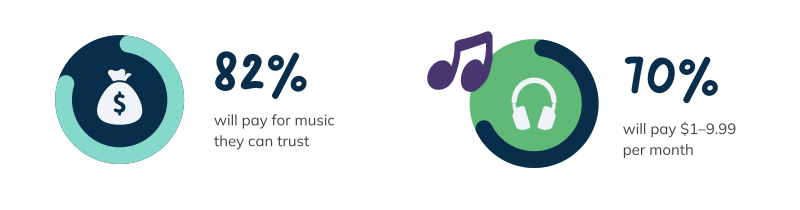
Parents are putting real money behind music they can trust.
Music affects whether users stick around.
That level of recommendation is rare, and it turns music into a driver of organic growth, not just engagement.

By this point, the pattern is clear. Parents expect clean music; they're not consistently getting it, they hold apps responsible when it breaks, and they'll pay for and recommend the apps that get it right.
The question is how product teams should approach it. For some, that means building a branded music experience. For others, it means improving how music shows up inside an existing product. In both cases, the teams that get this right align around three things.
Most teams underestimate what this takes. Licensing is complex, theme-level filtering is subjective, and consistency across thousands of sessions requires a system rather than a one-time setup. The teams that approach music holistically see a more positive outcome by supporting engagement, building trust, and creating moments users come back for.
Parents have made the expectations clear, and the business case alongside them. They want better music experiences, and they're willing to pay for them. Build the experiences they trust, and you're opening a new line of value.
We asked parents what specifically signals that an app has a handle on its music, and the list comes in roughly the order any product person would predict. Ability to control settings (65%) sits on top, clear labeling (55%) and guaranteed filtering (52%) close behind. Same pattern as willingness to pay. Control is the strongest signal of trust.
This is where music starts paying for itself. 95% of parents say they'd recommend an app that consistently uses clean, family-friendly music. 62% pick "very likely." That's an untapped referral channel, or what we like to call music-led growth.
Sworkit's a useful proof point: adding kids-focused workout experiences didn't shrink their audience; it expanded engagement across the household.
Delivering this requires a system that can move beyond binary “explicit” filters and account for context, themes, and audience. It needs to reliably deliver licensed, pre-cleared music, apply consistent standards across every session, and give product teams the ability to shape the experience by user, setting, or time of day. Without that level of control, even well-intentioned music experiences drift away from what parents expect.
That's a tall order. The good news is there's a more practical way to get there.
A unified music system (UMS) covers all the requirements that product teams should be looking for. It’s an all-in-one music solution that delivers audience-appropriate music. It includes pre-cleared catalogs to simplify licensing, and comes in the shape of a music API your team can actually use. The curation layer is what holds it together, built for brands that need the operational depth this work actually requires.
 As Jeff Yasuda, Feed.fm’s CEO puts it: “Companies want the benefits of great music without the operational risk or licensing complexity of managing it themselves. Teams looking to improve their music experience need a system that complements their content and caters to their audience from day one. When teams get this right, music stops being a risk surface and starts becoming a growth lever."
A fitness app, a kids app, a wellness platform, and a faith-based service are asking four different questions about clean vs. explicit. A binary answers all four the same way. Each one needs a different setting.
As the unified music system powering leading fitness, health, and family-focused brands, we’ve spent years helping companies navigate the gap between “explicit” labels and what listeners actually consider appropriate. After streaming more than 700 million songs and seeing firsthand how inconsistent industry metadata could undermine trust, our curation team built the Feed.fm Music Rating System to evaluate both lyrics and themes with greater precision.
The system combines traditional clean/explicit labeling with a proprietary, theme-aware rating scale that accounts for context, including references to sex, drugs, and violence. Our five tiers (Safe, Mild, Teen, Adult, and Extreme) give product teams a vocabulary that maps to audience expectations instead of industry defaults. The result is a more reliable framework for delivering engaging family-friendly music experiences that align with brand values, audience expectations, and real-world listening environments.
As senior curator Juan Hernandez-Cruz puts it, "Some of the most surprising tracks we've had to flag are ones that appear completely harmless on the surface but don't hold up under closer scrutiny. For example, ‘Lose Control’ has a clean version, but its club-focused energy and underlying themes still make it feel inappropriate for the youngest kids. ‘Bust a Move’ is another example that feels fun and nostalgic, but the entire song is centered on pursuing women. Even something like ‘Intergalactic,’ which has no explicit content, can be flagged because its tone and delivery skew older and edgier than what we want for the youngest audiences. The common thread is that the biggest issues are songs that may seem safe yet don't meet the expectations of modern, highly curated kid-safe environments."
A reliable rating system gives you room to build mixes that move people. Keeping the lyrics clean and age-appropriate is crucial, but don't otherwise feel limited by what kids' music should be. Family-friendly does not have to mean boring.
Considering launching your own branded music service?
The Feed.fm unified music system powers family-friendly white-label music solutions.
If there’s one thing this report makes clear, it’s that parents are paying attention to the music in apps, and they’re making decisions about brands based on what they hear. The apps earning trust are the ones treating music like a real part of the product experience: something that deserves strategy, controls, and care.
Parents have already told product teams that they want music experiences that feel safe, flexible, and reliable. They want to trust that the app they hand their kid today will still feel right tomorrow morning. And when apps deliver that experience, parents reward them with stronger loyalty, higher willingness to pay, and enthusiastic recommendations to other families.
Family-friendly music does not have to mean boring playlists or watered-down experiences. The teams that get this right are building products people feel comfortable bringing into living rooms, workouts, classrooms, and weekend mornings. Trust is harder to earn than it used to be, and music is one of the places it gets won or lost. The teams that get music right are the ones parents stay loyal to. We've been helping brands earn that trust through music for years, and we'd love to help you do the same.
We've spent years helping brands turn music into a measurable advantage. Let's talk about what it could do for yours.
